Cost · Los Angeles, CA
Wolf Convection Fan Motor Replacement Cost
If the fan behind the back wall has begun to grind or screech, a bearing is going and you are in the fourth band. If it has gone silent and the roasting has turned uneven, the question is whether the motor died or whether nothing is telling it to turn.
| Band | Installed |
|---|---|
| Convection fan or motor | $260–$690 |
| Service call | $89 |
Screech, stall, or silence
Three noises, three different diagnoses. A screech that builds as the cavity warms is a bearing that has lost its grease, and it is the classic reason a motor is changed. A stall — the fan running for a while and then giving up part way through — is usually that same bearing further along, because metal grows as it heats and the shaft begins to bind. Silence is the one that is not always the motor: a fan that never turns at all may be waiting on a switch, a relay or the control that drives it, and none of those is the same repair or the same band.
Why the rear cover sets the labour
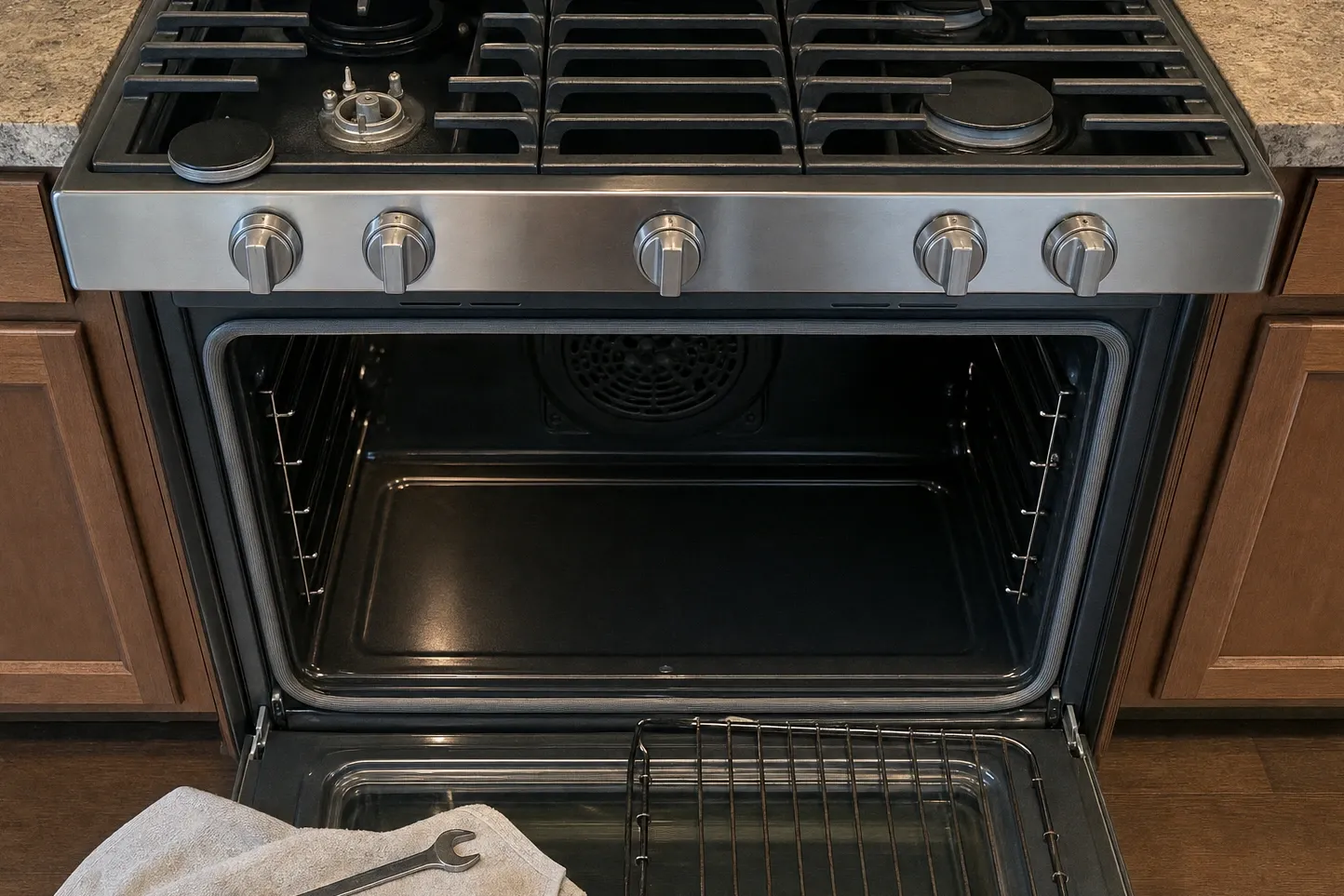
The blade sits behind a round cover in the middle of the cavity’s back wall, and the motor sits immediately behind that cover, outside the cavity. The part itself is unremarkable. The labour is emptying the oven, taking the cover off, and freeing the blade from its shaft, which on an appliance that has been run hot for years is the slow half of the afternoon. After that comes reaching the motor’s fixings and its leads from behind or below, depending on how the machine was built into the cabinetry. Access is what moves a job from one end of the band to the other.
What the band covers
The motor, its blade, and the gaskets and fixings disturbed to get at them, plus the run afterwards that proves the fan is quiet at temperature and not merely quiet cold. If that testing shows the motor was innocent and the drive signal was missing all along, the work moves to the control band instead — and you hear that before parts are ordered, not after.
Reviews
What owners said after the invoice
One fault, what it turned out to be, what it came to.
4.9/ 51,058 reviews
After every bake the cooling fan kept running half the night. He found a thermistor reading warm long after the cavity was cold, and changed it. Simple in the end, but it took two visits to pin down.
Baldwin R.
Steam oven kept stopping partway and flashing for water even with a full tank. Hard water had furred the pump and the level sensor. He descaled it, changed the sensor, and left instructions for keeping it clean.
Noelani K.
Ran the clean cycle before guests arrived and the oven died with the door still locked. A blown thermal fuse, plus a latch motor that had given up. He released the door and fitted both parts that afternoon.
Cyril B.
Two ways in, and nothing to fill out
Say what the machine is doing, and the fault gets named
Have the model number to hand if you can, or just the letters at the front of it — DF, GR, SRT, CG, CI, SO, DO, PW. Those say what you own, and what you own decides which parts travel out with the technician.
$89 service call, flat, credited against an approved repair · line answered 24/7